

Reading the Mountain West
My (loose) reading list for 2026

If you’re new here, welcome! I’m Miranda, and Mountain Daylight Time is a series of dispatches from the Intermountain West. I’m so happy you could tag along.
It’s a classic case: I was a voracious reader as a kid, but over time, schoolwork and that damn screen eroded the habit. I’ve been gradually reintroducing reading into my routine over the past couple years, and this year, I set a goal of reading ten books.
But instead of ten random books, I decided to take the opportunity to get to know my home region on a deeper level and incorporate as many books about the Intermountain West as I can. Below, you’ll find a list of the books at the top of my to-read list. It’s definitely not exhaustive, but it’s a place to start. I plan to return here every few months to catch you up on the books I’ve read, my opinions, and how they’ve shaped my understanding of the West in new ways.
Fiction:
For some reason, I’ve ended up reading a lot less fiction in recent years, which is something I’d like to change. To ease myself back in, I included plenty of sci-fi and speculative fiction on the list — if you’re familiar with the literary magazine I run, you’ll know why that appeals to me!
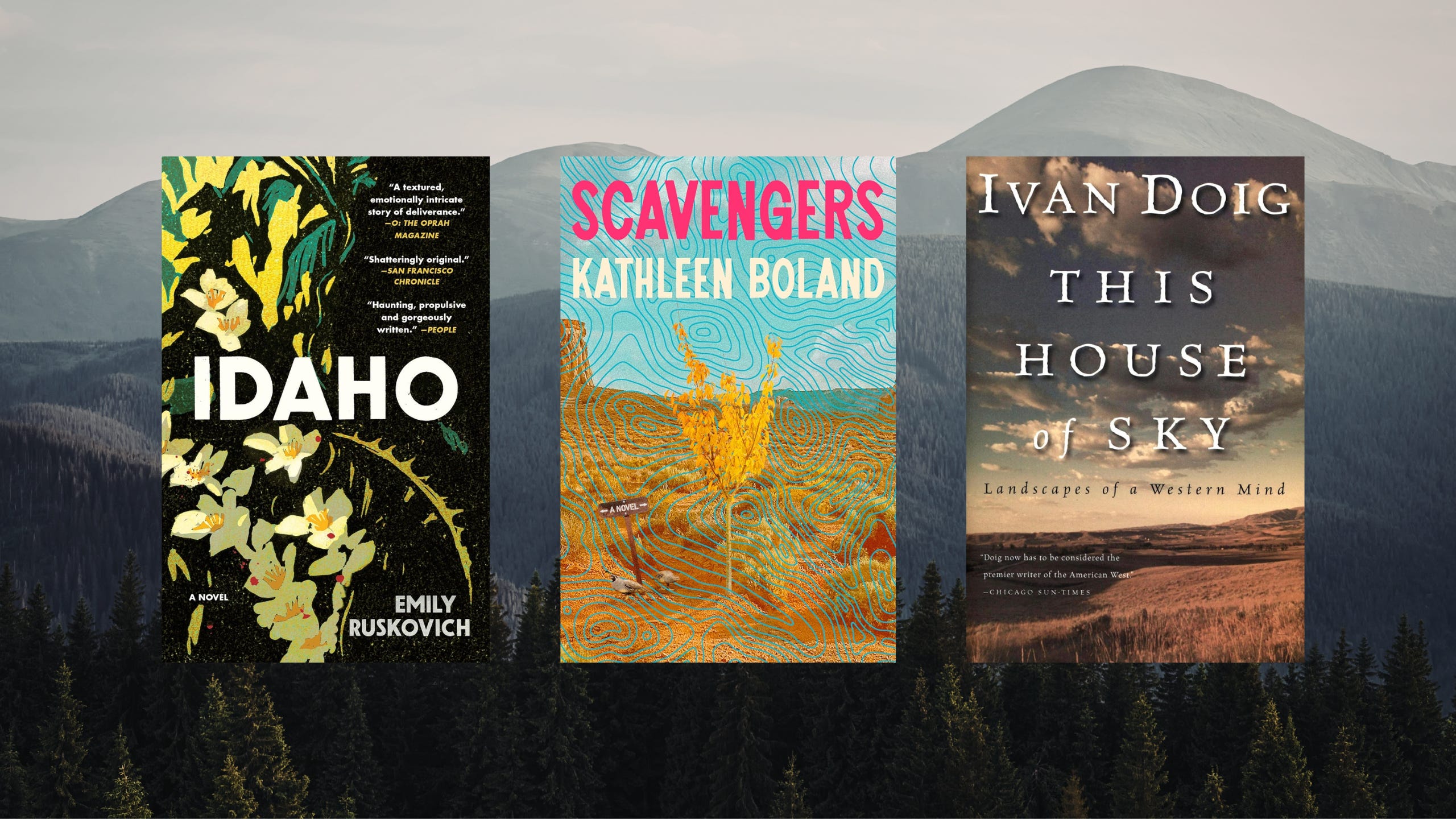
Idaho by Emily Ruskovich
“Ann and Wade have carved out a life for themselves from a rugged landscape in northern Idaho, where they are bound together by more than love. With her husband’s memory fading, Ann attempts to piece together the truth of what happened to Wade’s first wife, Jenny, and to their daughters.”
I’ve actually already started this book, and while it’s been a difficult read due to the heavy subject matter, I keep coming back for Ruskovich’s thoughtfully elegant prose and crisp descriptions of the landscapes of northern Idaho. I’ll let you know my final thoughts once I’ve finished the book.
Scavengers by Kathleen Boland
“After being fired for taking an uncharacteristic risk at her commodities trading job, Bea Macon sublets her New York apartment and books a one-way ticket to stay with her mother, Christy, a free spirit who has been living in Salt Lake City on Bea's dime.”
This title struck me as lighter and more fun than some of the others on this list. A dysfunctional mother-daughter road trip beginning in my favorite city? Sign me up.
Seventh Son by Orson Scott Card
“Using the lore and the folk-magic of the men and women who settled North America, Orson Scott Card has created an alternate world where magic works, and where that magic has colored the entire history of the colonies.”
I have always been a big Orson Scott Card fan, and I read this book years ago as a child. I don’t remember any of the plot, but I do remember being fascinated by the alternate history worldbuilding that Card employs. I’m wagering that I’ll gain a deeper appreciation of this story as an adult, now that I have a better understanding of Card’s LDS and pioneer roots that certainly influenced his writing.
The Water Knife by Paolo Bacigalupi
“Detective, assassin, and spy, Angel ‘cuts’ water for the Southern Nevada Water Authority and its boss, Catherine Case, ensuring that her lush, luxurious arcology developments can bloom in the desert and that anyone who challenges her is left in the gutted-suburban dust. When rumors of a game-changing water source surface in Phoenix, Angel is sent to investigate.”
This post-apocalyptic title immediately piqued my interest, as I spend a lot of time thinking about drought and climate disaster related to the Great Salt Lake’s decline. I haven’t read a straightforward futuristic sci-fi novel like this one in years, so it should be an interesting change of pace.
Trail of Lightning by Rebecca Roanhorse
“While most of the world has drowned beneath the sudden rising waters of a climate apocalypse, Dinétah (formerly the Navajo reservation) has been reborn. The gods and heroes of legend walk the land, but so do monsters.”
Another climate/water story, similar to The Water Knife. This one, though, is told through an indigenous lens— an important cultural aspect of the Intermountain West that I’d like to learn more about.
Nonfiction:
Nonfiction books have somehow become my go-to over the years, so I made sure to include some on this list as well. I’ve gathered a mix of titles ranging from history books to narrative nonfiction and memoir:
The Glorians: Visitations from the Holy Ordinary by Terry Tempest Williams
“In this time of political fragility, climate chaos, and seeking beauty wherever we can find its glimmer, Terry Tempest Williams introduces us to the Glorians. They are not distant deities, but the ordinary, often overlooked presences—animal, plant, memory, moment—that reveal our shared vulnerability and interconnectedness with the natural world.”
Terry Tempest Williams is a big name in Salt Lake City, and especially among activists working to save the Great Salt Lake, of which she is one. In her new book, which comes out in March, Williams reflects on time spent in Utah’s red rock desert, and her encounters with the “holy ordinary” there.
This House of Sky: Landscapes of a Western Mind by Ivan Doig
“Ivan Doig grew up in the rugged wilderness of western Montana among the sheepherders and denizens of small-town saloons and valley ranches. What he deciphers from his past with piercing clarity is not only a raw sense of land and how it shapes us, but also… our inextricable connection to those who shaped our values in our search for intimacy, independence, love, and family.”
Ivan Doig has been lauded as one of the essential authors of the American West. He’s a third-generation Montanan, and I’m excited to read his perspective on growing up in a state I don’t know much about yet.
River of Shadows: Eadweard Muybridge and the Technological Wild West by Rebecca Solnit
“Solnit shows how the peculiar freedoms and opportunities of post–Civil War California led directly to the two industries—Hollywood and Silicon Valley—that have most powerfully defined contemporary society.”
This one is less-directly related to the Intermountain West, but Eadweard Muybridge is known, in part, for his work photographing and filming Yosemite. So much writing about this region focuses on nature (for good reason!), so this book on technology seemed like an interesting contrast.
Sky’s Witness: A Year in the Wind River Range by Chip Rawlins
“A naturalist leads readers on a tour of the Central Rockies, describing the flowering plants, the ways of the animals, the history of the Shoshoni, the effects of the twentieth century on the landscape, and more.”
The Wind River Range in Wyoming has a special place in my heart, since my family has been camping and hiking there for several generations now. I’ve only been able to visit once, a couple months after I moved to Utah in 2022, and I immediately fell in love.
Under the Banner of Heaven: A Story of Violent Faith by Jon Krakauer
“Defying both civil authorities and the Mormon establishment in Salt Lake City, the renegade leaders of these Taliban-like theocracies are zealots who answer only to God; some 40,000 people still practice polygamy in these communities.”
A friend of mine has been recommending this book to me for years. One of the longer entries on this list, Under the Banner of Heaven is especially intriguing because of its location in Salt Lake City, where Fundamentalist LDS groups feel very far away (though some still live here under the radar, like the Apostolic United Brethren).
So let me know — if you’ve read any of the books on my list, is it a must-read or a must-skip? And which books did I miss?
Until next time,
Miranda
☕ Enjoying MDT? You can buy me a coffee, if you’d like! ☕